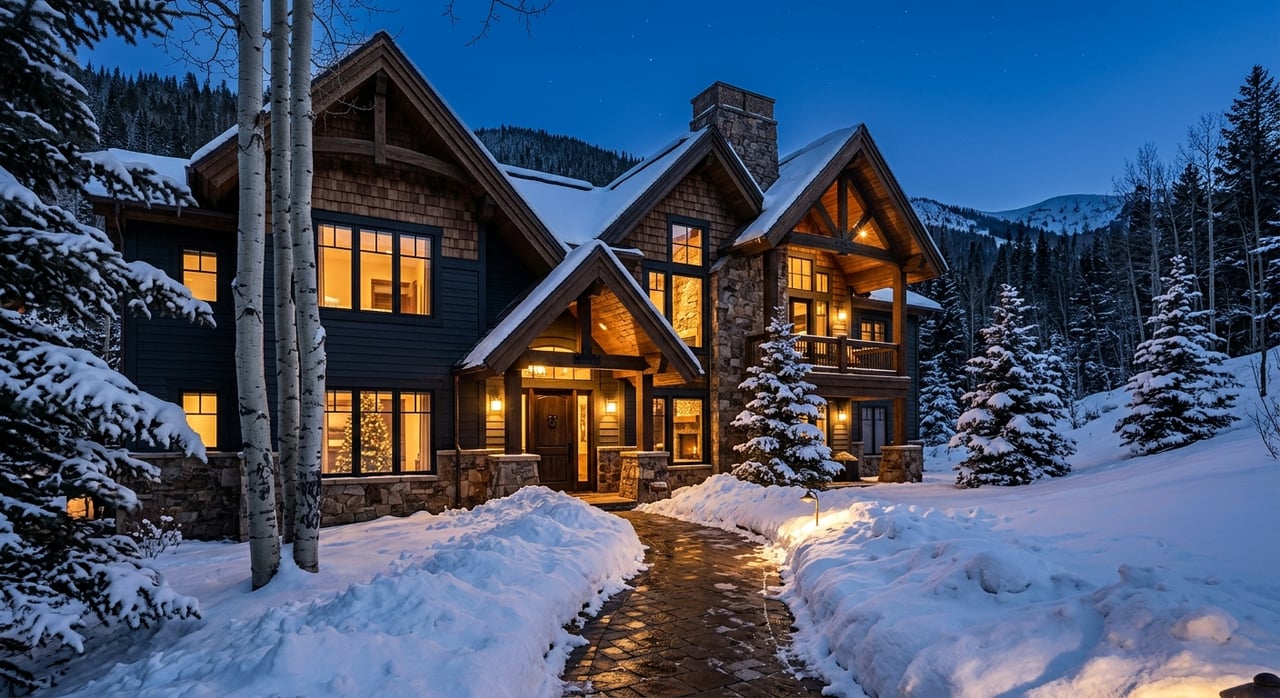
Comparing Snowmass Village Neighborhoods for Second Homes
If you picture Snowmass Village as one big second-home market, you can miss what really drives value and fit. In practice, Snowmass functions more like a collection of connected resort pockets, each with a different balance of convenience, privacy, and upkeep. If you are comparing where to buy, understanding those differences can help you choose a property that matches how you actually plan to use it. Let’s dive in.
Snowmass Village is organized around several activity cores, not one single center. The town plan identifies West Village, Base Village, and Snowmass Center as separate hubs, and the village shuttle, Sky Cab gondola, and RFTA buses connect them.
That layout matters for second-home buyers. Aspen/Pitkin County Airport is about 15 minutes away, which makes Snowmass especially workable for shorter stays, long weekends, and frequent fly-in visits. Once you are here, the question becomes less about getting to Snowmass and more about which part of Snowmass best supports your routine.
For most second-home buyers, the decision comes down to three tradeoffs: convenience, privacy, and maintenance. Properties closer to the resort core tend to be more walkable, condo-oriented, and rich in services. Properties farther from the core tend to offer more separation, larger footprints, and a more residential setting.
That does not make one option better than another. It simply means the right neighborhood often depends on whether you want easy ski access, a quieter club setting, or a detached home with more views and space.
Base Village is the newest and most activity-dense part of Snowmass Village. Residences in and around this core are known for direct access to lifts, restaurants, shops, and year-round gathering spaces like the plaza, ice rink, conference center, and The Collective.
For many second-home owners, this is the easiest entry point into Snowmass ownership. Buildings and complexes in this area often emphasize ski-in/ski-out or near-slope access, along with amenities like pools, hot tubs, concierge services, ski lockers, covered parking, and shuttle access.
Representative options in this category include Hayden Lodge, Capitol Peak Lodge, Electric Pass Lodge, Lumin, One Snowmass, Woodrun V, The Crestwood, Shadowbrook, The Enclave, and The Ridge. The mix runs from studios and one-bedroom condos to larger residences and townhomes.
That range gives buyers flexibility. You may find a compact residence built for quick personal use, or a larger property that supports longer stays and hosting family or guests.
This pocket is a strong fit if you want:
For buyers who value flexible use and minimal day-to-day planning, Base Village and nearby slopeside product often stand out first.
This is generally the premium to highest-price segment for the best-located condo and townhome inventory. Aspen Board of REALTORS reported a 2025 Snowmass Village median sales price of $2.0 million for townhouse and condo properties, but the most desirable slopeside residences can sit well above that townwide median.
In other words, the convenience premium is real. If direct lift access and walkability are at the top of your list, you should expect pricing to reflect that.
Snowmass Club offers a different feel from the ski-core neighborhoods. This area is centered more on club amenities and a residential rhythm, while still providing access to Snowmass Village through private transportation and shuttle connections.
The club highlights a 19,000-square-foot athletic center and year-round amenities that include golf, tennis, pickleball, aquatics, spa services, and dining. For buyers who want their second home to work well beyond ski season, that broader amenity base can be a major draw.
The town’s subdivision table includes Country Club I, Country Club II, and Snowmass Club Villas. Residences here are generally positioned as larger, turn-key properties rather than small ski studios.
Snowmass Club markets two-bedroom and three-bedroom offerings, with three-bedroom residences described at roughly 1,861 to 2,177 square feet. That scale can appeal to buyers who want more room without moving fully into a large single-family home.
Snowmass Club and nearby golf-course communities often fit buyers who want:
If skiing matters but does not need to define every stay, this area can offer a more balanced ownership experience.
This part of Snowmass often falls in the upper-middle to premium tier, usually below the most irreplaceable ski-in/ski-out product. One recent Snowmass Club sale example cited by Redfin closed at $3.525 million, compared with the townwide 2025 townhouse and condo median of $2.0 million.
That spread helps frame the value proposition. You may pay more than the broader condo median, but you are often buying into larger floor plans and a distinct amenity profile.
If you want a standalone home with more privacy, larger lots, and stronger view orientation, Snowmass Village’s hillside and lower-density neighborhoods are where you will likely focus. The town’s subdivision table includes Woodrun, Ridge Run, Fox Run, The Divide, Melton Ranch, Horse Ranch, Two Creeks, Wildridge, Wildoak, Wildcat Ranch Homesteads, Wildcat Vista, and Hidden Meadows.
Many of these areas are already 90 to 100 percent built out. That means availability often depends more on resale timing than on new supply.
This part of the market tends to offer the most residential feel in Snowmass Village. Instead of stepping out to the plaza or lift base, you are more likely to be prioritizing quiet surroundings, mountain views, and room to spread out.
For some buyers, that is exactly the point. A second home in these neighborhoods may feel more like a long-term retreat or legacy property than a simple ski condo.
The tradeoff is that detached and hillside ownership is usually more maintenance-sensitive. The town’s snow-removal plan notes greater snow accumulation on north-facing slopes, and Wood Run and Ridge Run are plowed before Melton Ranch, the Snowmass Club area, and Horse Ranch.
That practical detail matters when you are not in town full time. Driveway access, snow exposure, and reliance on plowing and shuttle use can all shape how effortless the home feels during winter visits.
Residential services also differ by neighborhood. The town offers optional curbside trash collection in Horse Ranch, The Crossings, Rodeo Place, and Country Club, while most other residential customers use dumpster sheds.
It may seem like a small detail, but small service differences can affect day-to-day convenience. For second-home owners, those operational factors are often part of the buying decision.
This is where Snowmass Village’s full single-family pricing is more likely to show up. Aspen Board of REALTORS reported a $8.125 million 2025 median sales price for single-family homes, compared with $2.0 million for townhouse and condo inventory.
That gap reinforces a basic truth about Snowmass. Detached-home neighborhoods are not just a different address choice. They are a different market segment altogether.
If you want a quick shorthand, Snowmass Village can be viewed through three second-home lenses.
| Area type | Typical feel | Best for | General price positioning |
|---|---|---|---|
| Base Village and slopeside | Walkable, service-rich, ski-focused | Lock-and-leave use and short stays | Premium to highest |
| Snowmass Club and golf-course areas | Amenity-driven, quieter, more residential | Four-season resort living | Upper-middle to premium |
| Hillside single-family neighborhoods | Private, view-oriented, detached | Space, privacy, and legacy ownership | Highest single-family tier |
This framework will not answer every question, but it gives you a practical starting point. Once you know your preferred lifestyle pattern, the neighborhood search usually becomes much clearer.
Recent data show just how wide the range can be in Snowmass Village. Aspen Board of REALTORS reported a 2025 median sales price of $8.125 million for single-family homes and $2.0 million for townhouse and condo properties.
Redfin’s March 2026 townwide median sale price was $1.8 million across all home types, with a median price per square foot of $2.04K. Those figures are not in conflict. They reflect different mixes of inventory, and the broader townwide number is pulled lower by the amount of condo product in the market.
Recent sold examples underscore that spread. Redfin cited a $779,000 condo, a $3.525 million Snowmass Club residence, and a $9.65 million luxury residence, all within Snowmass Village.
For second-home buyers, the takeaway is simple: Snowmass is not one price band. It is a set of distinct submarkets, and neighborhood choice is one of the biggest drivers of both lifestyle fit and pricing.
The best second home is not always the one with the most amenities or the biggest views. It is the one that matches how you will really use it.
If you expect quick ski trips and want minimal upkeep, the resort core may be the best fit. If you want a quieter base with strong year-round amenities, the club and golf-course pocket may make more sense. If privacy, space, and long-term family use matter most, hillside single-family neighborhoods deserve close attention.
In a market as varied as Snowmass Village, local guidance matters because the differences are practical, not just cosmetic. If you want help comparing neighborhoods, property types, or seasonal-use goals, The Burggraf Group Will And Sarah Burggraf can help you evaluate the options with a clear, local perspective.
Working with Will and Sarah Burggraf means expert guidance through Aspen real estate. With 30+ years of experience, they offer personal, informed, and dedicated service.