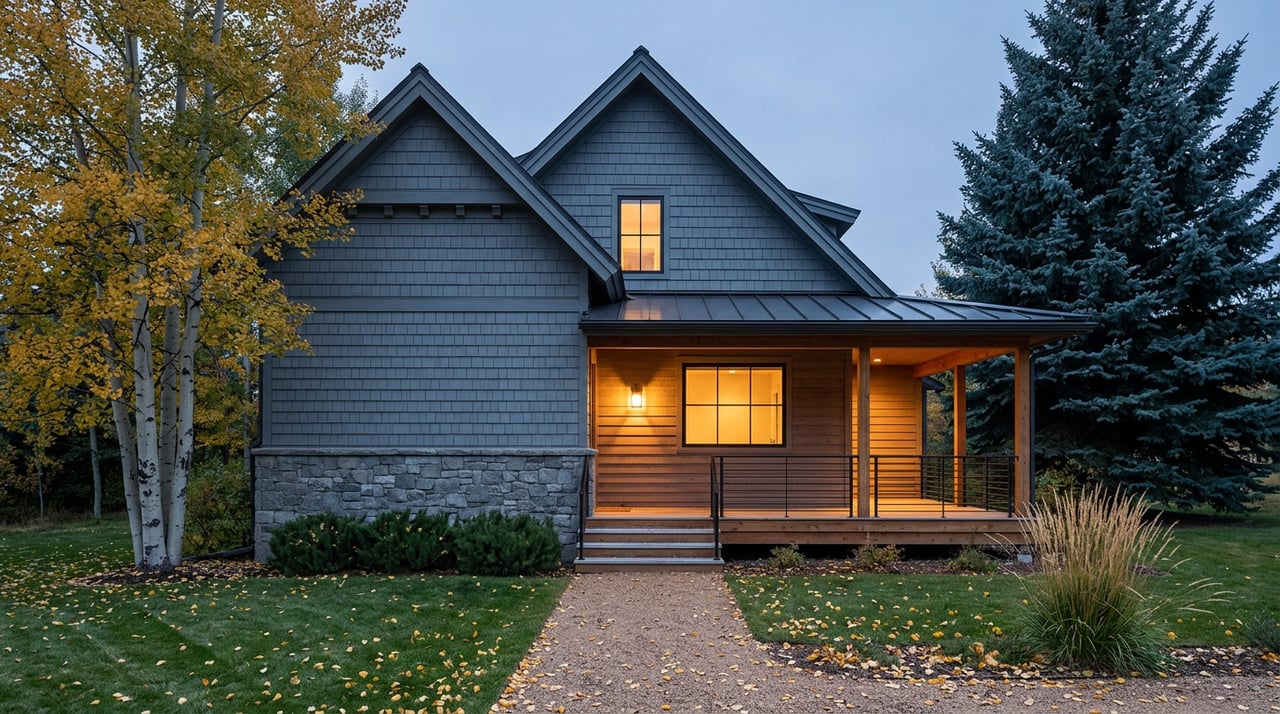
Snowmass Village STR Permit Transfer Rules for Buyers
A buyer under contract on a Snowmass Village condo pulls up the listing history. The unit rented forty-plus nights last winter. The seller's rental statements are in the closing packet. The buyer assumes that history, and the permit that produced it, comes with the deed.
It does not.
Under Town of Snowmass Village rules, a short-term rental permit is tied to the owner who holds it, not the unit itself. Any change of ownership terminates the permit automatically. The buyer does not inherit the seller's rental category, their occupancy history, or their place in line. They start over, in MUNIRevs, from zero, and there is no guarantee they land in the same permit tier the seller had.
That single fact reshapes how a rental-producing property in Snowmass Village should be underwritten. The rest of this piece is about why.
Snowmass Village's short-term rental regulations were adopted under Ordinance 6, Series 2022, and took effect May 1, 2023. The framework has been amended since, most recently effective December 30, 2025, but one rule has held since the original ordinance: permits are non-transferable. A change of ownership results in termination and revocation of the existing permit, and the new owner is required to apply for a new one.
This is easy to miss because most of the closing conversation in Snowmass Village revolves around title, survey, and the HOA resale certificate, not the rental license sitting in a municipal portal under the seller's name. But for a buyer who is underwriting a purchase partly on rental income, the permit is not a footnote. It is the mechanism that turns the property into a business, and that mechanism resets to zero at the closing table.
What actually conveys at closing is the real estate. What does not automatically convey:
A buyer who wants to keep renting the unit needs to file a fresh application, and the town's own compliance staff, listed as Sara Nester for building code compliance and Jen Beach for financial and sales tax questions, process that application the same way they would for any first-time applicant. There is no fast lane for buying into an existing rental operation.
Not every rental-producing property in Snowmass Village qualifies for the same kind of permit. The town's STR framework sorts properties into four types, and the category is set by the physical building and its operating structure, not by what the previous owner was permitted to do.
| Permit Type | Who Qualifies | Notable Rule |
|---|---|---|
| Type 1 | Named hotel-condo properties only | Applies to Viewline, Limelight, Wildwood, and Mountain Chalet, per the town's own FAQ |
| Type 2 | Large PUDs with 25+ units, centralized check-in and management | At least 67% of units in the development are expected to participate |
| Type 3 | Properties that don't meet Type 1 or Type 2 criteria | Occupancy capped by bedroom count |
| Type 4 | Single-family homes and duplexes | Four-night minimum stay required |
That Type 1 row is worth sitting with. A buyer looking at a condo that markets itself with hotel-style amenities, but sits in a building other than Viewline, Limelight, Wildwood, or Mountain Chalet, cannot obtain a Type 1 permit no matter how the previous owner operated the unit. If a rental brochure implies front-desk service and daily housekeeping, the town's classification of the actual building is what determines whether that model is legally permitted going forward, not the marketing.
Type 4 carries its own operating constraint that surprises buyers moving from more flexible markets: single-family homes and duplexes are locked into a four-night minimum stay. A buyer who was planning on weekend turnover to maximize calendar coverage during peak weeks needs to model revenue against that floor, not against what a comparable property in a market without a minimum-stay rule might produce.
Anyone comparing a 2026 purchase against a prior owner's rental numbers also needs to account for a regulatory reset that took effect at the very end of 2025. Under the revised rules effective December 30, 2025, the town simplified permitting and renewal, but also raised the cost of holding a permit and tightened enforcement:
The unified April 30 expiration matters for anyone buying mid-year in 2026. A new owner applying for a permit now is not getting a fresh twelve-month clock. They are buying into a cycle that already expires on the same date as every other permit in town, regardless of when in the year they applied. That compresses the effective coverage period for a permit obtained partway through the year, which is one more reason the seller's rental income from a full prior season is not a clean proxy for what a new owner can produce in year one.
A town permit is necessary but not sufficient. The town's own guidance is direct that there are no current town regulations restricting where an STR can be located within Snowmass Village, but that silence at the town level does not mean the building is open. Homeowners associations set their own rental policies, and where an HOA is more restrictive than the town, the HOA's rule controls. A buyer can hold a valid Type 3 or Type 4 permit and still be blocked from renting if the building's HOA caps the number of rental units, requires an approved property manager, or bans short-term rentals outright.
This means the real diligence question is not "does the town allow this," it is "does this specific HOA allow this, today, and does that policy show up anywhere in the resale documents." An HOA can also change its own rental policy after a buyer closes, which is a separate risk from the permit question but compounds it. A unit that is legal to rent at closing under both town and HOA rules can become non-compliant later if either layer changes.
For anyone evaluating a rental-producing property in Snowmass Village, a few questions belong in due diligence before the offer goes in, not after:
None of these questions show up on a standard listing sheet. They come from reading the town's own STR framework and the building's HOA documents side by side, which is exactly the kind of work that separates an accurate closing from a surprised one.
Does a short-term rental permit transfer to a new owner in Snowmass Village? No. The town's regulations state that a change of ownership terminates the existing permit, and the new owner must apply for a new permit through MUNIRevs.
How much does an STR permit cost in Snowmass Village? The permit fee is $400, effective January 1, 2026. A separate business license is also required.
Do all STR permits expire on the same date? Yes, as of the December 2025 update, all permits expire annually on April 30, replacing the previous staggered renewal schedule.
Can a building's HOA restrict short-term rentals even if the town allows them? Yes. Where an HOA's rental policy is stricter than the town's rules, the HOA's policy controls.
Which buildings qualify for a Type 1 hotel-condo permit? Per the town's own FAQ, Type 1 currently applies to Viewline, Limelight, Wildwood, and Mountain Chalet.
Rental income potential is real in Snowmass Village, but it is not a fixed asset that passes with the title. It is a permit that resets, a building classification that may or may not match what the marketing implies, and an HOA layer that can override both. Working through those questions before you write an offer, rather than after you close, is the kind of groundwork The Burggraf Group does with every buyer who is weighing a Snowmass Village property as both a home and an income asset. Connect with Will and Sarah for a private consultation before your next offer goes in.
Working with Will and Sarah Burggraf means expert guidance through Aspen real estate. With 30+ years of experience, they offer personal, informed, and dedicated service.