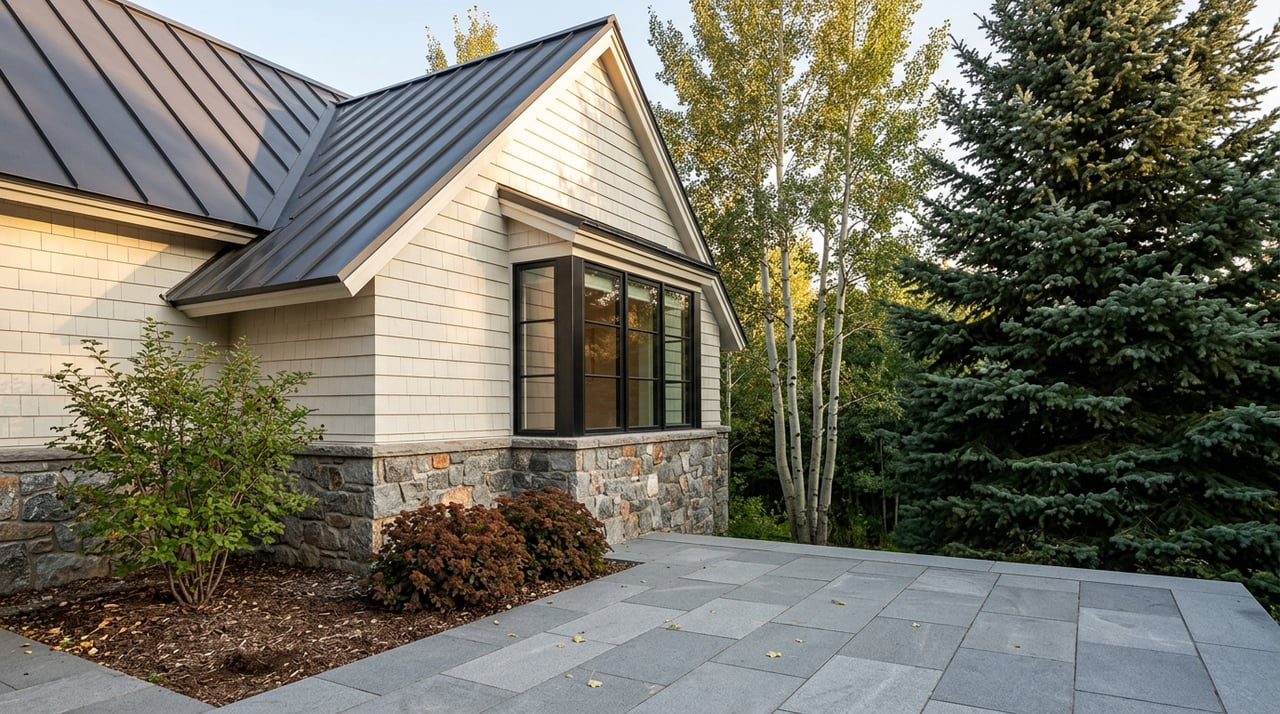
What Snowmass Village Buyers Miss About the Real Estate Transfer Tax
Two buyers close in Snowmass Village the same week. Both pay $3,000,000 for their homes. One writes a check for $30,000 in transfer tax at the table. The other writes one for $60,000. The purchase price didn't create that gap. The parcel line did.
Every buyer who has shopped in Snowmass Village for more than a week has heard the shorthand: the town has a 1% real estate transfer tax, paid by the buyer, due at closing. That's true, and it's also incomplete. The 1% figure is the rate for most of the village. It is not the rate for some of its most recognizable addresses.
The Town of Snowmass Village charges a 1% Real Estate Transfer Tax on the purchase price of any property conveyance within town limits. The purchaser is responsible for it, and it's due at the time of transfer, filed alongside a completed RETT application before the deed goes to the Pitkin County Clerk and Recorder.
This isn't a recent add-on. The tax took effect on March 23, 2000, and in November 2008 Snowmass Village voters extended it in perpetuity, meaning there's no sunset date sitting on a future ballot the way there is in some neighboring jurisdictions. Across Colorado's mountain towns, revenue from taxes like this one typically funds parks, open space, affordable housing, and capital improvements, and Snowmass Village is no exception. It's one of the reasons a town of fewer than 3,000 full-time residents runs a transit and housing system that punches well above its population.
For a buyer closing on a free-market single-family home almost anywhere else in the village, that 1% is the whole story.
Base Village changes the math. Properties inside the Base Village Metro District carry an additional 1% transfer tax on top of the town's rate, for a combined 2% due at closing. This isn't a clerical error or a double-billing glitch. It's a second, distinct taxing authority layered over the same transaction, tied to how Base Village's infrastructure was financed when the district was built.
The buildings where this applies are ones most Snowmass shoppers already recognize by name: The Viceroy, Lumen, One Snowmass, Limelight, Electric Pass, Cirque, and Aura. A buyer comparing a ski-in/ski-out condo at one of these addresses against a similarly priced home a quarter mile away, outside the metro district boundary, is comparing two different tax exposures before a single dollar of price negotiation happens.
"staring at 'tax to the max' mill levies that are unique to Base Village"
That line came from a Base Village property owner at a 2016 town meeting, and it wasn't about the transfer tax. It was about the annual property tax mill levy, a separate and ongoing cost layered by the Base Village General Improvement District and Metro District on top of what every other Snowmass Village property owner pays. According to the Town Manager's office at the time, Base Village homeowners were paying at a rate more than double what other village property owners paid annually, an arrangement one owner described as taxation without representation. The mill levy and the transfer tax are different mechanisms, funding different things on different timelines, but they share a root cause: Base Village was built using layered special taxing districts, and owners have repeatedly discovered the full cost only after they'd already signed.
That pattern goes back further. In 2011, a group of Base Village condo owners filed suit alleging, among other claims, that the tax burden on their units, reported at the time to be well above what condo owners elsewhere in Snowmass were paying, hadn't been fully disclosed before purchase. The case settled confidentially in late 2015, with owners keeping their units, but the underlying complaint is the same one a 2026 buyer should ask about before writing an offer: what, exactly, does this specific address owe, and is it disclosed clearly enough to act on before closing rather than after.
Buyers cross-shopping Aspen and Snowmass Village often assume "transfer tax" means the same thing in both towns. It doesn't.
| Snowmass Village | Aspen | |
|---|---|---|
| Base rate | 1.0% | 1.5% |
| Additional layer | +1.0% inside the Base Village Metro District (2.0% total) | none |
| What it funds | housing, transit, and capital improvements | 1.0% to an affordable housing fund, 0.5% to the Wheeler Opera House |
| Price exclusion | none | first $100,000 of price excluded from the housing portion |
| Sunset provision | none, extended in perpetuity by voters in 2008 | housing portion: 2040, extended to 2060 by 2024 vote. Wheeler portion: extended through 2039 |
Aspen's rate is higher on paper, but it comes with a built-in exclusion on the first $100,000 of price that Snowmass Village's flat 1% doesn't offer. The housing portion of Aspen's tax also had to go back to voters in 2024 to extend its life another 20 years, while Snowmass Village settled the question permanently back in 2008. Neither structure is better in the abstract. They're just different enough that a buyer's spreadsheet from one town won't transfer to the other.
Base Village's tax layering isn't limited to real estate. As of February 2026, the district's combined sales tax rate dropped half a percentage point, from 11.15% to 10.65%, after running at the higher rate for some time. It's a small adjustment, but it's evidence that the metro district's tax structure isn't frozen. Rates inside Base Village move on their own schedule, separate from the rest of the village, which is one more reason a buyer should confirm current numbers at the time of contract rather than relying on a figure from even a year earlier.
A buyer working through a contract in Snowmass Village, especially on anything inside Base Village, should ask a closing agent to confirm three things in writing:
None of this changes whether a given home is the right one to buy. It changes what a buyer should expect the closing statement to say, and that's a conversation worth having before an offer goes in, not after.
Is the transfer tax negotiable between buyer and seller? Under the Town's ordinance, the purchaser is responsible for the tax. A purchase contract could theoretically allocate the cost differently between the parties, but the Town collects from the buyer of record, so any private arrangement needs to be handled through the contract itself, not assumed.
Are there exemptions that might apply to a specific purchase? Section 4-95 of the Municipal Code lists a limited number of exemptions, and across Colorado's transfer-tax towns generally, government transfers and foreclosure-related deeds are common exempt categories, though every municipality governs its own list. Don't assume a transaction qualifies. Confirm it with a closing agent before relying on it.
Will the Base Village add-on ever go away? There's no confirmed end date. The additional 1% is tied to the Base Village Metro District's financing structure, which covers infrastructure and operations the district was formed to support. It's reasonable to expect it persists as long as those obligations do.
Does the 2% apply to every property inside Base Village, or just specific buildings? It applies to any conveyance within the Base Village Metro District boundary. The Viceroy, Lumen, One Snowmass, Limelight, Electric Pass, Cirque, and Aura are the addresses most buyers will recognize, but the boundary, not the building name, is what determines the rate.
Transfer tax math is one small piece of a much larger picture in a market where price, boundary lines, and building-specific financing can all move the real cost of a purchase. If you're comparing a Base Village address against something outside it, or trying to understand what a specific Snowmass Village parcel actually owes at closing, The Burggraf Group can walk through the numbers with you before you write an offer, not after.

Working with Will and Sarah Burggraf means expert guidance through Aspen real estate. With 30+ years of experience, they offer personal, informed, and dedicated service.