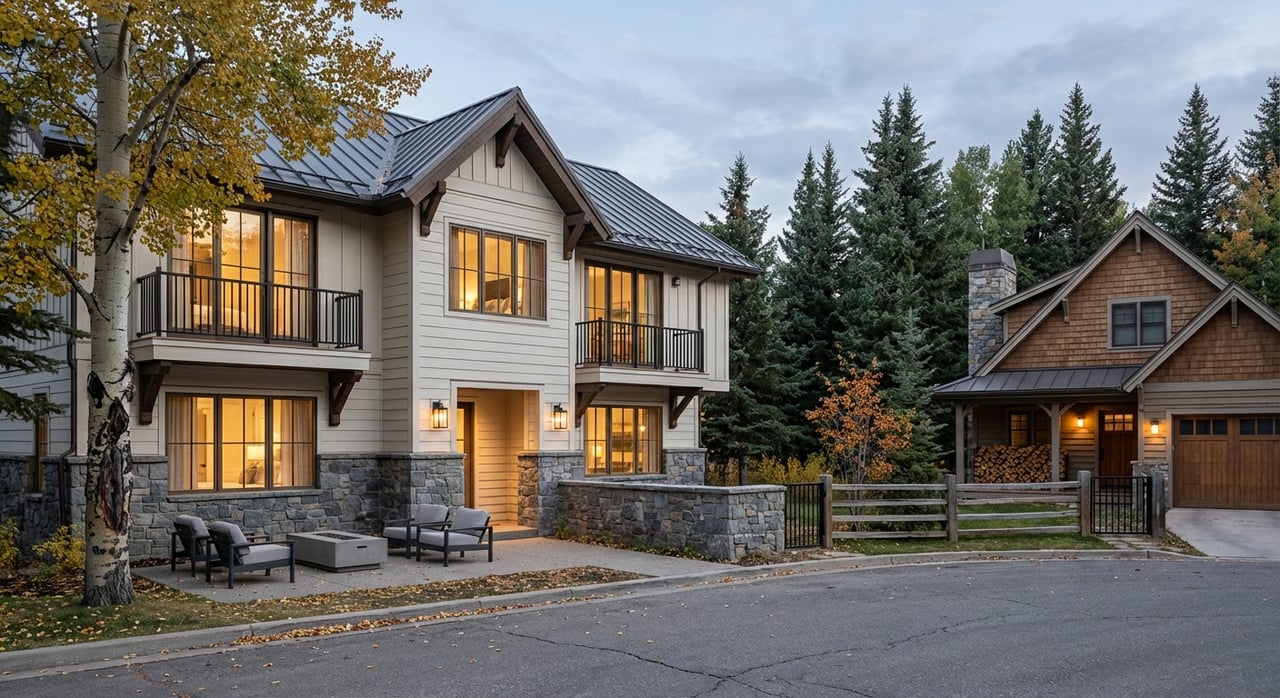
Aspen Condo vs House: Choosing the Right Lifestyle Fit
Torn between a slope-side condo and a private mountain home in Aspen? You’re not alone. The tradeoffs here go beyond style and price. Permits, taxes, HOA rules, and true operating costs can shape both your lifestyle and your bottom line. In this guide, you’ll learn how condos and single-family homes compare in Aspen, what rules affect rental use, what to expect for ongoing costs, and how to match neighborhoods to your goals. Let’s dive in.
Before you fall for a view or a lobby scent, get clear on how you plan to use the property. Will you be here a few weeks a year, all season, or full time? Do you want rental income when you are away? How important are walkability and on-site services versus privacy and acreage? Your answers will steer you toward a condo or a house and set the criteria for your search.
For context, Aspen remains a high-price, low-supply market. Third-party trackers have reported Aspen’s average home value in the multi-million dollar range, with Zillow showing about $3.41M as of January 31, 2026. Market statistics can swing because a few ultra-luxury sales move the averages, so use current data for specific decisions.
Condos often deliver prime locations at a lower entry price than comparable single-family homes in the same radius. The tradeoff is HOA dues, which vary widely based on services and amenities. Representative listings show ranges from roughly the high hundreds per month to well over $2,500 per month in full-service buildings. What those dues cover matters. Snow removal, parking, utilities, shuttle service, insurance on common elements, and reserve funding differ by association. Always request the HOA budget, reserve study, and rules during due diligence.
If you value rental flexibility, some condo buildings make short-term rentals relatively straightforward, while others restrict them. In the City of Aspen, stays under 30 days require a permit, and the rules vary by permit type. Review the City’s program for details on Lodging Exempt, Owner-Occupied, and Classic permits, including caps and requirements listed on the City of Aspen short-term rental page. Confirm whether the building allows short-term rentals in its bylaws before you assume any income plan.
You want walkability, services, easier maintenance, and a potential path to rental income within a clear permit and HOA framework.
The flip side is responsibility. Owners handle exterior upkeep, snow plowing, landscaping, and more complex systems. Operating budgets are usually higher than for a low-service condo, and you may need local help when you are away. Full-service care is available through local property managers, and fees vary based on the scope of services.
Single-family homes inside Aspen city limits still follow the City’s short-term rental rules. In unincorporated Pitkin County, the licensing program includes a four-night minimum stay and a 120-night annual limit for most licenses, among other requirements. Review the Pitkin County STR licensing page to understand if your intended use is allowed for a given parcel.
You value privacy, outdoor living, larger floor plans, and long-stay comfort more than building amenities and walkability.
The City of Aspen requires permits for stays under 30 days and offers three permit types. Owner-Occupied permits are limited to 120 nights per year, while other types have different caps or qualifications. You must also hold a business license, display your permit number, and follow tax reporting requirements. Review the current rules on the City of Aspen short-term rental page. Always verify whether a unit already has a valid permit and whether that permit type can transfer.
In unincorporated Pitkin County, the short-term rental license program sets a four-night minimum stay and typically limits most licenses to 120 nights per year. There is also a history-of-use requirement for many properties. Fee formulas are tied to assessor market value. Read the full program details on the Pitkin County STR page.
Some Aspen-area properties carry deed restrictions overseen by the Aspen/Pitkin County Housing Authority (APCHA). These can limit occupancy, set resale formulas, and control who can purchase. If a property is deed-restricted, APCHA approval may be required for resale. Learn more at APCHA. Confirm deed restrictions early. They directly affect marketability and rental use.
Colorado’s assessment rules have changed in recent years. For 2025 planning, the residential assessment rate for local government tax calculation is 6.25 percent, with different school rates. Your actual tax bill depends on assessed value and local mill levies. For parcel specifics and historical tax data, consult the Pitkin County Assessor resources and review mill-levy details with your advisor. The state’s guidance is posted by the Colorado Department of Property Taxation.
Think in three buckets.
Each area has its own rhythm, access, and setting. Match the neighborhood to your daily routine, from ski days and summer concerts to quiet evenings at home.
Aspen is seasonal, with peak demand in winter and a strong summer and events calendar. Downtown and slope-side addresses command premium daily rates and occupancy. More remote homes can perform well with the right positioning but often require stronger marketing and guest services. For a realistic pro forma, use property-specific comparables, seasonal calendars, and any available booking history. Policy details and local studies offer useful context, including the Pitkin County STR impact study.
Use this as a pre-offer checklist:
Choose a condo if you want:
Choose a single-family home if you want:
If you plan to rent short term inside city limits, expect to collect and remit lodging and STR excise taxes as outlined by the City’s STR materials. Permit type can affect how reporting works. For ownership taxes, use the state’s residential assessment rate guidance and your parcel’s mill levies to model your annual bill. The most current details are posted by the Colorado Department of Property Taxation and the Pitkin County Assessor. Local media also track inventory and pricing trends that shape strategy; see recent coverage in the Aspen Times for broader context.
Both options can be excellent choices in Aspen. Condos deliver convenience and services that fit lock-and-leave living. Single-family homes offer privacy, space, and the feel of a true mountain retreat. Your perfect fit comes from aligning lifestyle goals with rules, costs, and neighborhood character. Confirm permit status, deed restrictions, HOA allowances, and tax mechanics before you assume rental income or resale flexibility.
Ready to map your goals to the right properties and neighborhoods? Connect with The Burggraf Group Will And Sarah Burggraf for a private consultation and a clear plan.
Working with Will and Sarah Burggraf means expert guidance through Aspen real estate. With 30+ years of experience, they offer personal, informed, and dedicated service.